
Implants are artificial tooth roots placed in the jawbone for complete or partial tooth loss.
What is the purpose of implantation?
It is the elimination of tooth deficiencies. To enable patients to use fixed dentures or support and stabilise the removable dentures in cases where fixed dentures cannot be made.
Who can receive implant treatment?
- If you have an adequate jawbone that has reached complete growth
- If you have a sufficient jawbone to place implants
- If you do not have any health problems that might affect bone healing
- If you have healthy gum tissues
- If you prefer fixed dentures to mobile detachable dentures, you may consider implant treatment.
How are implants made?
The patient should go through a general health assessment, and any general health problems that may pose a risk should be resolved.
A comprehensive intraoral examination should be performed; pre-surgical planning should be supported with panoramic 3D x-ray images.
Implants are surgically placed in the jawbone by specialist physicians. This process takes 10-15 minutes for each implant. If your jawbone is too thin and not rigid enough, bone grafts are necessary, prolonging the procedure time by 10-15 minutes. In total, implant surgery is completed in 30-90 minutes.
When is the prosthesis made after implant surgery, and how long does it last?
There is a waiting period of about three months; this is the time required for the titanium implants to fuse to the jawbone.
The production of the implant-supported prosthesis takes between 3-10 days, depending on the type of prosthesis to be made. In our clinic, the digital measurement method is also used in the production of prosthesis on implants.
How long is the life cycle of the implant prostheses?
A successful implant prosthesis can be used for a lifetime if the patient pays attention to oral hygiene and has periodic checks. The minimum target period is 7-15 years. A lifetime warranty covers implants used in our HLC Dental Clinic.
In today’s dentistry, implants provide an aesthetic appearance with the closest function to natural teeth and aim to increase the quality of life of our patients. There is no health risk in implant surgery performed under the above-mentioned necessary conditions.
We wish all our patients healthy smiles.

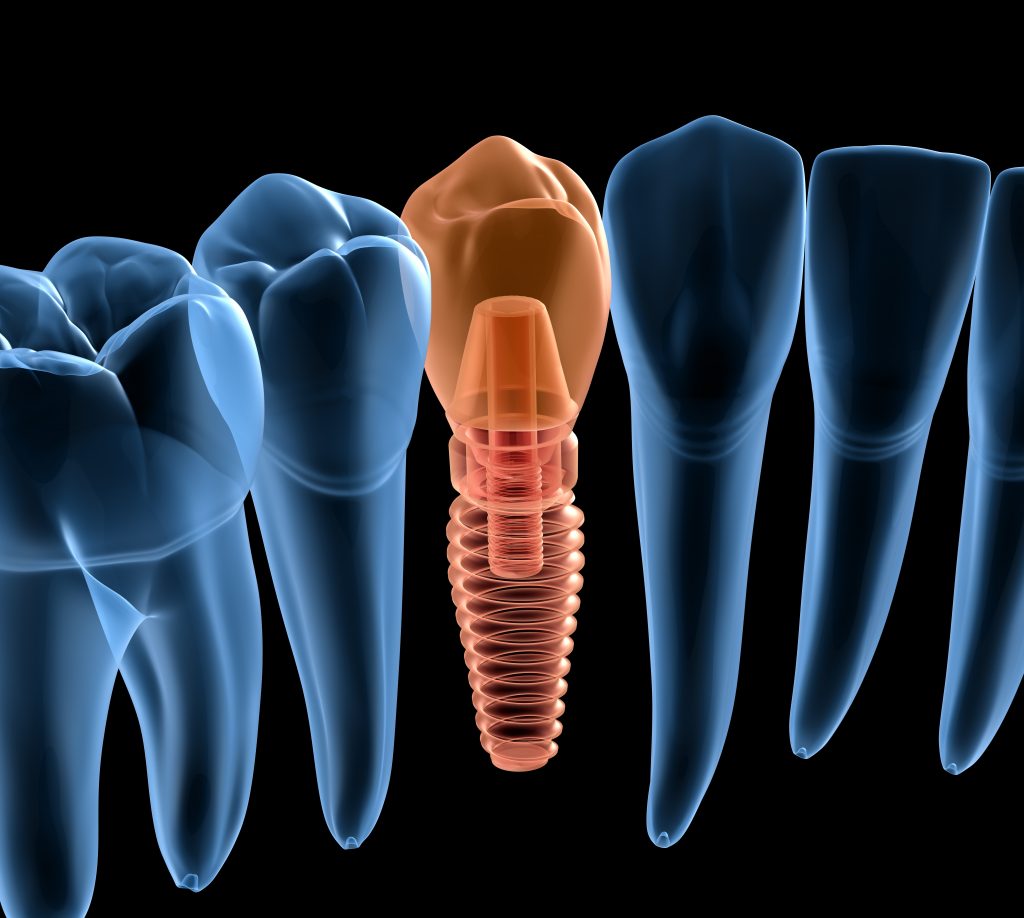
Single Tooth Loss Implant
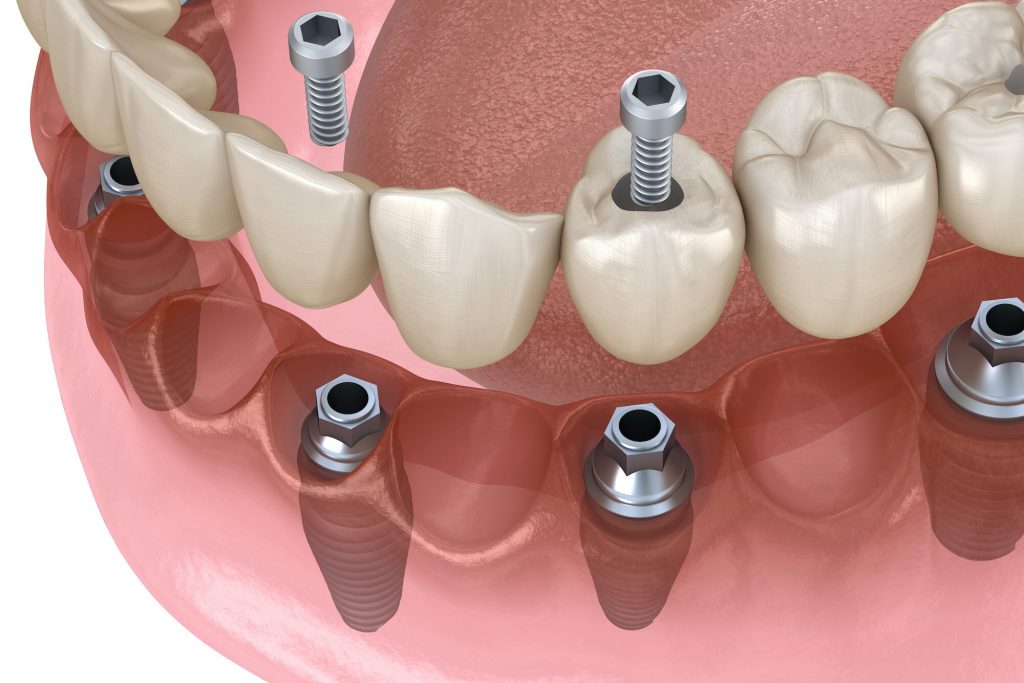
Implant for complete tooth loss
Dental applications in insufficient bone
Another method to increase bone volume is to place bone fragments taken from the patient (from the jawbone or hip) into the jawbone. This method is called autogenous grafting.